
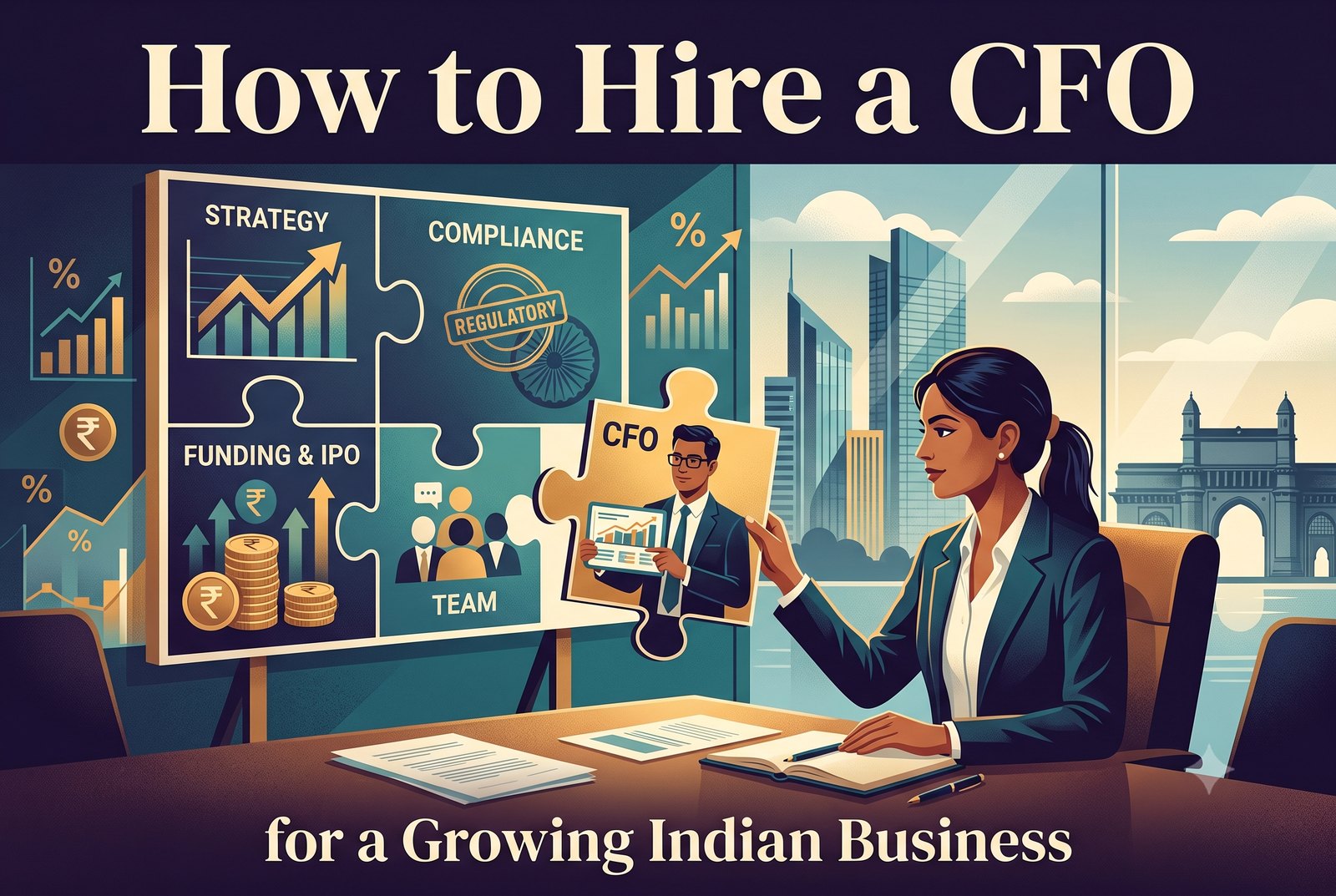
When you actually need a CFO
Not every growing business needs a full-time CFO yet — and hiring one too early is an expensive mistake. The signals that you've crossed the threshold are usually structural: you're raising or servicing significant external capital, your financial complexity has outgrown a controller or finance manager, you're preparing for a fundraise, acquisition, or IPO, or the board wants a strategic financial partner rather than a reporting function.
If your need is mostly compliance and reporting, a strong Financial Controller or a fractional CFO may serve you better and cost far less. A CFO is for when finance becomes a strategic lever, not just a scorekeeper.
Defining the right profile
The most common CFO hiring mistake is recruiting for a generic "CFO" instead of your CFO. A CFO who scaled a listed manufacturing company is a very different animal from one who took a startup through Series C. Before searching, get specific about:
- Stage fit — has this person operated at your size and trajectory, not just your eventual size?
- Domain — sector-specific regulation, unit economics, and capital structures matter (a pharma CFO ≠ a SaaS CFO).
- The specific mandate — fundraising, cost transformation, systems and controls, IPO readiness — these need different strengths.
- Culture and reporting line — a CFO who thrives reporting to a hands-off founder may struggle with a deeply involved one.
Where CFO candidates come from
The best CFO candidates are almost never actively job-hunting on portals — they're employed, performing, and not answering job-board applications. Reaching them requires confidential, targeted executive search: mapping the market, identifying who's doing the relevant work at comparable companies, and approaching them discreetly. This is fundamentally different from posting a role and screening inbound CVs.
How to assess a CFO
Assessing a senior finance leader goes well beyond technical competence — that's table stakes at this level. The differentiators are judgment, communication, and fit:
- Strategic judgment — can they tell the story behind the numbers and influence the business, not just report on it?
- Board and investor presence — will they hold their own with your board and external stakeholders?
- Team building — a CFO is only as good as the finance function they build beneath them.
- Reference depth — structured referencing with people who've actually worked with them, not just names they've offered.
Structuring the offer
CFO compensation in India spans a wide band depending on company size, stage, and whether equity is involved. The offer is rarely won or lost on base salary alone — for senior candidates, the deciding factors are usually the mandate's ambition, the quality of the founder/CEO relationship, equity or long-term incentives, and the credibility of the growth story. Structure the conversation around those, and involve someone experienced in closing senior offers, where counter-offers and competing processes are common.