
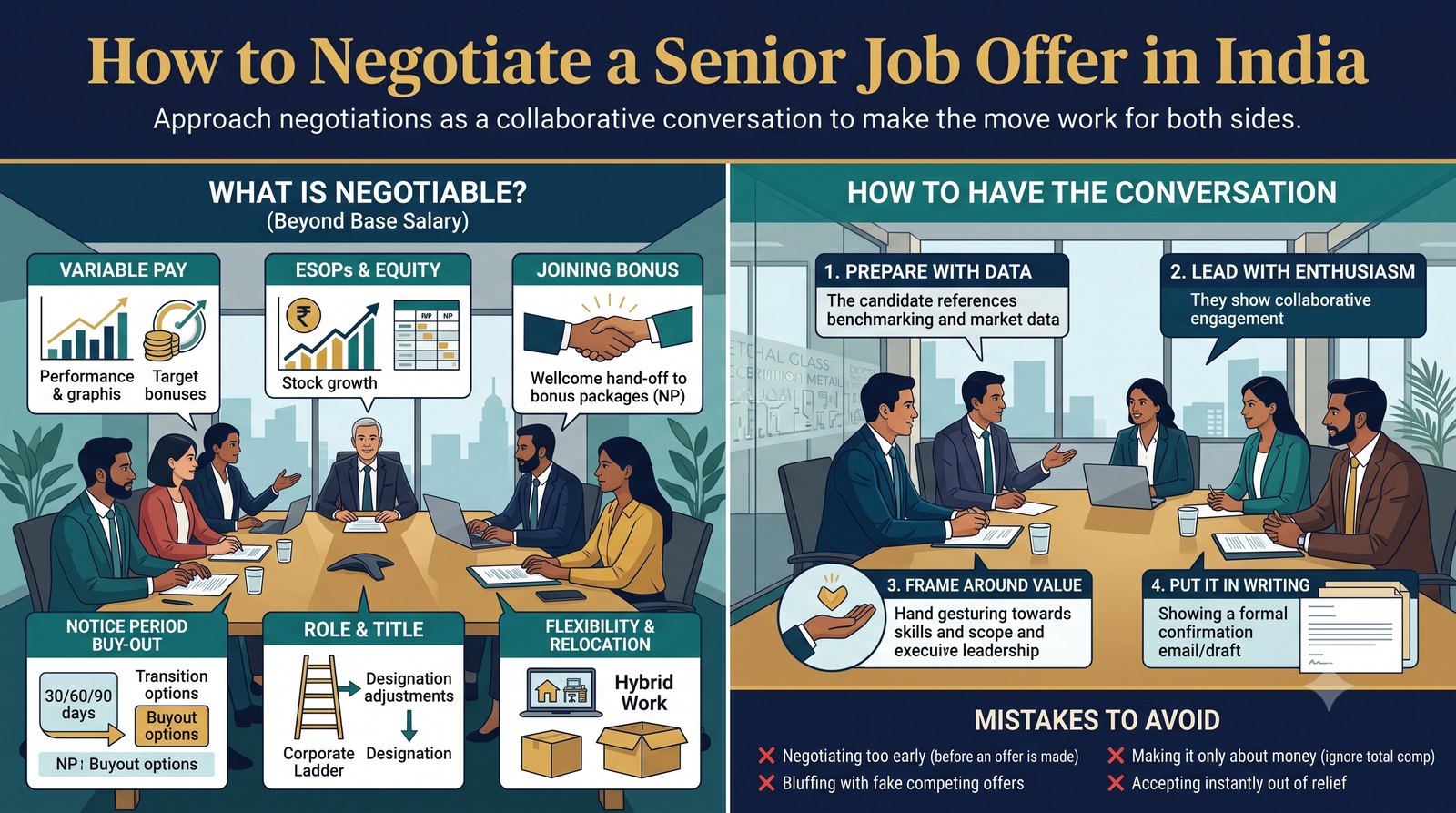
The right mindset
Negotiation is not a fight, and it won't cost you the offer if handled professionally. An employer who has decided you're the right person expects a senior candidate to discuss terms — it's a normal part of the process. Approaching it as a collaborative conversation about making the move work for both sides, rather than a confrontation, almost always produces a better result and a better start to the relationship.
What's negotiable beyond salary
Fixating on base salary alone leaves value on the table. For senior roles in India, the full package often includes elements with real room to move:
- Variable pay and bonus structure — the target, the metrics, and how much is guaranteed in year one.
- Joining bonus — often used to bridge notice-period gaps or forfeited incentives at your current employer.
- ESOPs or long-term incentives — increasingly significant, especially in growth companies.
- Notice period buy-out — the new employer covering some of a long notice period.
- Role, title, and reporting line — sometimes more valuable long-term than a marginal salary bump.
- Start date, flexibility, and relocation support.
How to have the conversation
Do your homework on market benchmarks for the role, level, and sector so your ask is grounded, not arbitrary. Lead with genuine enthusiasm for the role — then raise terms specifically and calmly. Frame requests around value and fit ("given the scope and my experience with X, I'd expect the range to be…") rather than personal need. Put the key points in writing after a verbal discussion so there's clarity. And be decisive once terms are agreed — dragging out a settled negotiation damages goodwill.
Mistakes to avoid
- Negotiating before there's an offer — establish they want you first.
- Making it only about money — the best negotiations trade across the whole package.
- Bluffing with fake competing offers — it can backfire badly and damage trust.
- Accepting instantly out of relief — a brief, professional pause to consider is completely normal.
- Burning goodwill — you'll work with these people; negotiate in a way you'd want a future colleague to.
If you're working with a search consultant, use them — a good one manages the negotiation between both sides and often secures a better outcome than either party would alone. If you'd like to be considered for senior roles, you can register as a candidate.